
Specialty 05 · Commercial & Industrial Concrete · US & Canada
Commercial & Industrial Concrete Marketing Built for Bids, Not Homeowner Quotes
General contractors, facility managers, developers, and building owners don’t shop for concrete the way a homeowner does. Focused exclusively on concrete since 2016, we build the prequalification credentials, project proof, scope-led pages, and GC contact tracking that hold up when a bid reviewer vets your firm, on assets that stay in your name.
- Exclusivity
- 1 Partner / Specialty / Metro
- Ownership
- 100% Client-Owned
- Scope
- US & Canada
- Prequalification & capability pages — EMR, OSHA safety program, COI, bonding capacity, and downloadable capability statement
- Technical scope pages — superflat warehouse floors (FF/FL tolerances), tilt-up, sitework, curb & gutter, and industrial foundations
- Scope-led intake — forms built for drawings, schedules, and access rather than a homeowner quote
- Search & LinkedIn alignment — consistent proof across Google Search, Business Profile, website, and LinkedIn
- GC contact & reactivation CRM — repeat bid relationships and invitations tracked in your own database
How Commercial B2B Evaluation Differs
Why Homeowner Playbooks, Generalist Agencies, and Shared-Lead Brokers Fail in Commercial Concrete
A homeowner compares patio photos and discounts. A commercial buyer is managing schedule risk, safety compliance, and multi-stakeholder approval—and looking for a reason to rule a sub out before sending an invitation to bid.
Generalist agencies run consumer flatwork playbooks
Broad agencies bid on generic concrete keywords and publish homeowner-style discount banners. When a GC estimator or project manager checks that site while building a prequalified bidder list, missing safety credentials and vague service lists immediately weaken credibility.
Shared-lead brokers have no place in B2B prequalification
Lead-broker directories are built to sell low-ticket residential quotes to competing crews simultaneously. Commercial GCs, developers, and industrial owners do not source tilt-up, superflat slab, or sitework subcontractors from shared consumer lead forms.
Multi-person vetting spans months, not one afternoon
An estimator finds your firm, a project manager reviews your capability statement and safety record, and an owner or developer signs off. Your website, Google Business Profile, and LinkedIn presence have to answer each reviewer’s questions cleanly without forcing a phone call.
Call volume is the wrong scoreboard
A commercial contractor can fill a quarter with a handful of well-scoped projects. Flooding your estimating desk with small residential calls wastes staff hours; disciplined scope targeting and repeat GC follow-up protect your estimators’ time.
What Commercial Buyers Check
Five Things a GC or Facility Manager Verifies Before Inviting a Commercial Concrete Bid
Each verification step maps to an asset we structure and maintain for you, so the documentation a prequalification reviewer expects is ready the moment they look.
Prequalification & safety credentials
Can you clear risk review?Your real EMR (Experience Modification Rate), OSHA safety program (OSHA 10/30 training and written safety manual), COI (Certificate of Insurance) readiness, and bonding capacity (bid, performance, and payment bonds) sit alongside a downloadable capability statement / prequalification packet. Exact thresholds vary by GC and owner, so we publish only what your company holds.
Capability pagesScope-indexed project galleries
Have you built this scale before?Your real project photos organized by commercial scope—superflat slabs, tilt-up panels, loading docks, sitework, and foundations—give reviewers an immediate read on crew capacity and finish quality across both your website and Google Business Profile.
Local search presenceTechnical scope clarity
Will estimating get real details?Scope-led landing pages and B2B intake forms ask for project type, approximate square footage or yardage, schedule window, drawings, and site access up front, routing commercial search demand straight to the right estimating contact.
Scope-led campaignsRepeat GC relationships
Do contractors call you back?Past general contractors, superintendents, and project contacts belong in a database you own. Permission-based follow-up and project-completion updates keep your firm top-of-mind between multi-month bid cycles.
Reviews & database reactivationBid-cycle & RFP readiness
Are you verifiable when named?We do not sell bid-board subscriptions or run estimating. When a GC verifies you alongside portals such as BuildingConnected, Procore, or ISNetworld, your site, capability packet, and CRM bid log back up the invitation cleanly.
GC contact tracking in CRM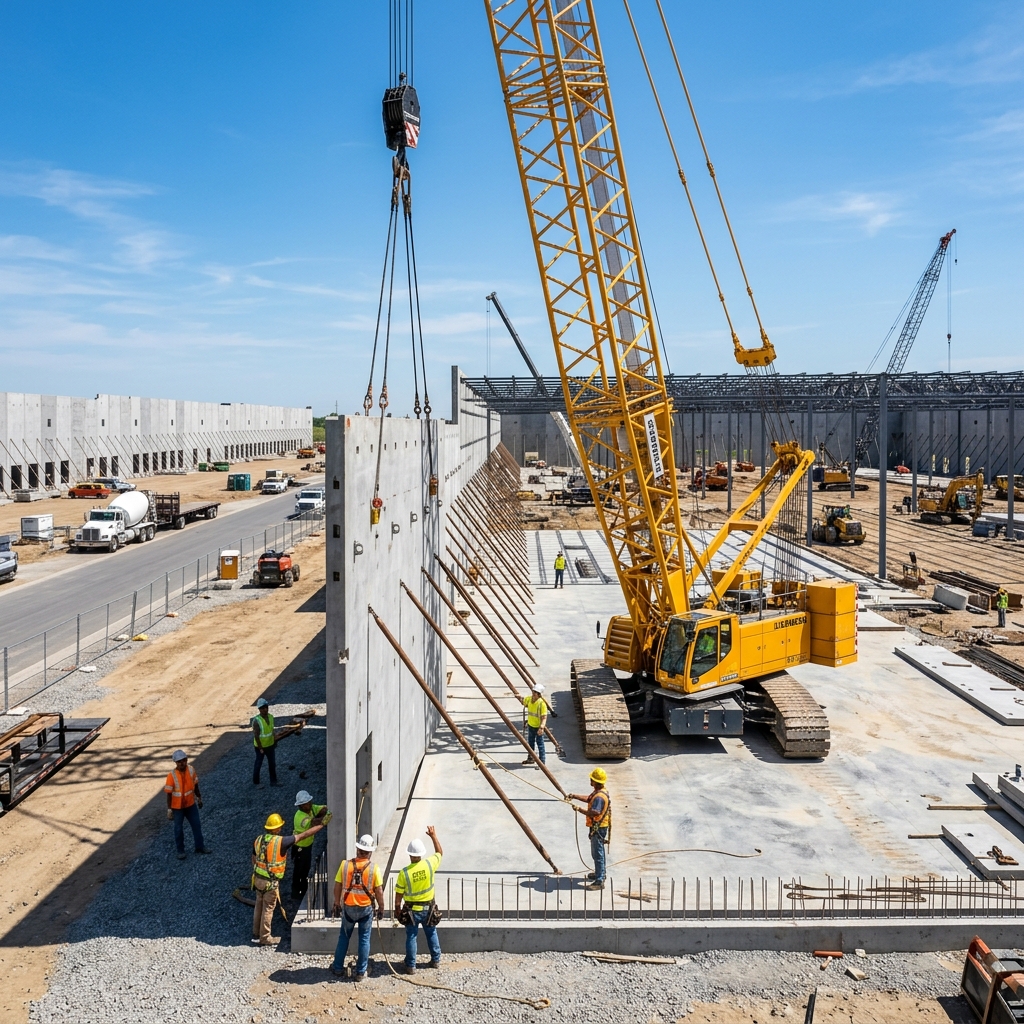
Warehouse · Tilt-Up · Sitework · Industrial Foundations
Organizing a Commercial Concrete Website Around Technical Project Scopes, Not a Generic Services List
Commercial estimators and developers search by technical scope: superflat warehouse floors (FF/FL tolerances) and laser-screed slab-on-grade pours, tilt-up wall panels, sitework, curb & gutter (and ADA ramps), industrial foundations and equipment pads, loading docks, and structural parking lots. A flat bullet list of “commercial concrete” forces reviewers to guess whether your crew handles their specification.
We give each core scope its own page with your real photos and technical parameters. Adjacent specialties with different buying paths—such as concrete pumping, industrial floor coatings, or structural repair and restoration—stay cleanly separated so each buyer lands on the right page. For conversion layout principles, see our Websites & Conversion insights.
- Technical scope details (e.g., FF/FL flatness specs, tilt-up, curb & gutter, equipment pads)
- Real project photography matched to that exact scope
- Direct link to your capability statement / prequalification packet (EMR, OSHA, COI, bonding)
- Project-intake form built for plans, schedules, and bid deadlines
Four Commercial Buyer Types
General Contractors, Facility Managers, Developers, and Building Owners Each Buy Differently
The same commercial crew may serve all four, yet each stakeholder finds you, checks risk, and approves a contract differently.
Buyer 01 · General Contractors
Vetting a reliable concrete subcontractor
A GC estimator or project manager needs a concrete sub who clears prequalification (EMR, OSHA safety program, COI, bonding capacity) and hits pour schedules. Capability proof and repeat working relationships carry far more weight than promotional copy.
Buyer 02 · Facility Managers
Solving an active operations problem
A facility manager is repairing or replacing a loading dock apron, warehouse floor bay, or curb-and-gutter section while the site stays active. Fast scoping, phasing around operations, and clean communication decide who wins the walk-through.
Buyer 03 · Developers
Protecting a delivery schedule and pro forma
A developer evaluates trades against comparable project scale—superflat distribution slabs, tilt-up shells, or multi-acre sitework. Documented galleries and a clean capability statement help your company make the shortlist.
Buyer 04 · Direct Building Owners
Hiring directly without an in-house facilities team
An industrial or commercial owner searching directly relies heavily on Google Search, your Business Profile, and clear scope pages to gauge whether your firm handles equipment pads, foundations, or lot replacements.
One company, several routes in. A GC may verify you after a referral, a direct owner through Google Search, and a facility manager through the Map Pack. Each route lands on a page calibrated to that buyer’s questions.
Long-Cycle B2B Verification
What Happens Across Multi-Month Commercial Bid Cycles When a GC Vets Your Company
Commercial procurement rarely closes in a single click. Estimators, project managers, and developers cross-check multiple touchpoints before an invitation goes out.
Google Search, Capability Site & LinkedIn
A GC estimator hears your name or searches a local scope, then cross-checks your website, Google Business Profile, and company LinkedIn presence to confirm active leadership, real project scale, and geographic fit.
EMR, OSHA, COI & Bonding Review
Before issuing plans, reviewers check safety and financial readiness: your EMR, OSHA safety program, COI limits, bonding capacity, and references. Hosting a downloadable capability statement / prequalification packet lets you link one clean URL inside any bid email or portal.
CRM Bid Logging & Reactivation
Projects often sit in design or permitting for months. Your CRM logs every GC contact, bid invitation, and scope inquiry so respectful, permission-based follow-up keeps your crew visible when construction finally mobilizes.
Honest scope boundary: we cannot place you on a general contractor’s private bid list, sell BuildingConnected or Procore access, or guarantee bid invitations. We build the verifiable digital proof reviewers inspect once your name is on the table, plus the CRM follow-up system that protects relationships you earn.
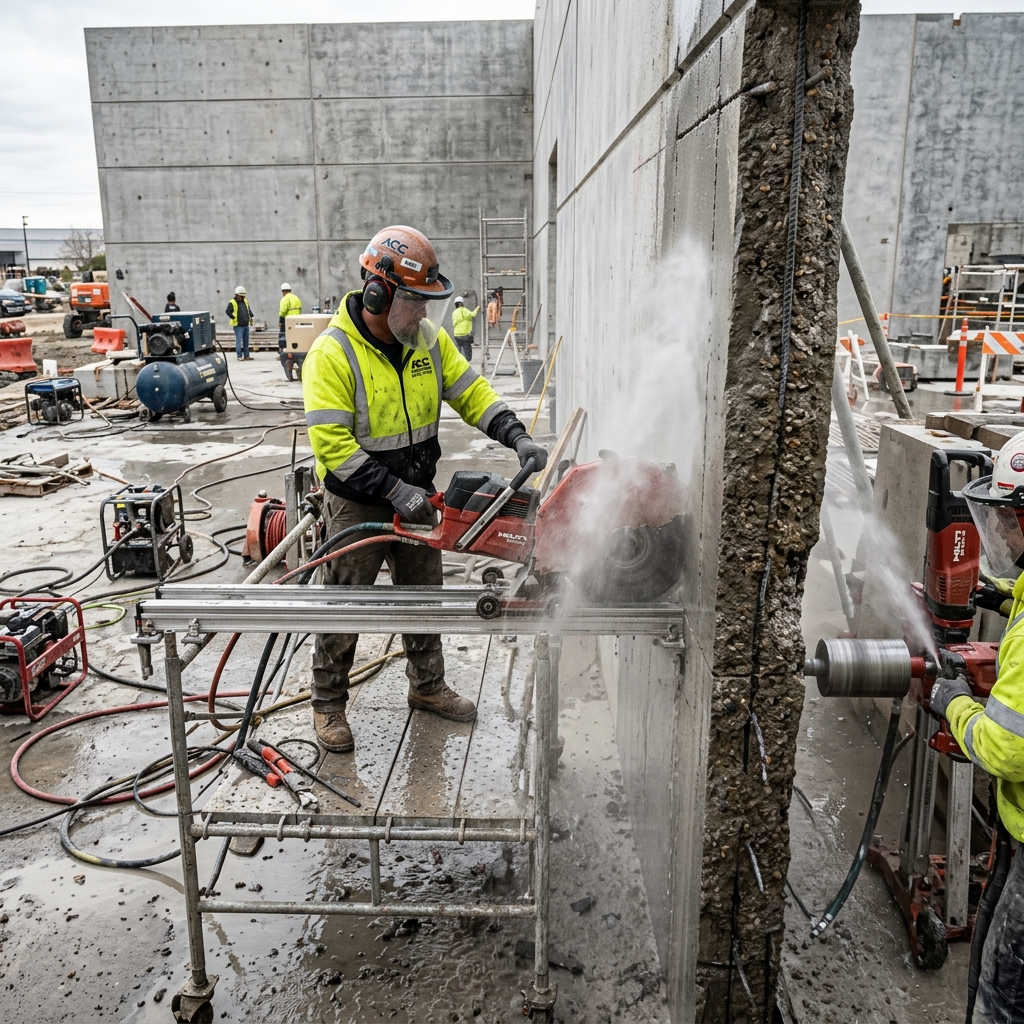
Concrete Cutting & Demolition
Marketing Concrete Cutting and Demolition as Its Own Scope-Led Search
Superintendents and facility managers searching for wall sawing, slab sawing, core drilling, trench cutting, or selective concrete demolition have an immediate operational need: a mechanical opening, a slab removal, or a utility tie-in on an active schedule.
We give cutting and demolition dedicated pages, search campaigns, and scope-specific intake so those buyers never land on a generic tilt-up or pour page. Structural follow-on scopes route cleanly to concrete repair and restoration.
- Exact element being saw-cut, core-drilled, or removed
- Slab thickness, reinforcement notes, and site access constraints
- Your equipment and containment methods, in your words
- Drawings, photos, and target mobilization window
Channel Strategy for Commercial Concrete
Five Owned Channels That Support a Long-Cycle Commercial Concrete Pipeline
Commercial work rarely closes from a single channel. Each service below supports multi-month GC verification and direct facility inquiries—explore the full system on our Concrete Marketing Services hub.
Channel 01 · Scope-Led Search
Google Ads for commercial scopes
Targets high-intent commercial searches (loading docks, industrial foundations, sitework, concrete cutting) with tight metro boundaries and strict residential negatives. Google Ads for concrete contractors
Channel 02 · Local Verification
Local SEO & Google Business Profile
Ensures GCs, developers, and facility managers verifying your name across Google Search and LinkedIn find accurate scope proof, project photos, and service-area signals. Local SEO for concrete contractors
Channel 03 · Digital Capability File
Website Design & Prequalification Hub
Houses your scope pages, project galleries, downloadable capability statement / prequalification packet (EMR, OSHA, COI, bonding), and B2B bid intake forms. Concrete contractor website design
Channel 04 · Bid Tracking & Speed
CRM & Missed-Call Automation
Captures incoming facility-manager calls when estimators are on site and tracks GC contacts, bid invitations, and project timelines in a CRM you own. CRM & missed-call automation
Channel 05 · Repeat GC & Facility Reactivation: Long commercial cycles mean past GCs, project managers, and property owners often forget who poured a clean job 18 months ago. Our Reputation Management & Database Reactivation workflows keep your firm in front of verified past contacts and collect project-completion proof without spam. Read more in Lead Handling & CRM insights.
Commercial Segment Matrix
How Marketing Differs Across GC Subcontracting, Facility Maintenance, and Industrial Warehouse Work
Three commercial segments compared by who evaluates the bid, what credentials they weigh, and how each relationship is supported.
| Commercial segment | Who evaluates & how they search | What they weigh | Page & proof that fits | Channels & lead handling |
|---|---|---|---|---|
| Commercial GC subcontracting | A GC estimator or project manager building a bidder list via referrals, local search, LinkedIn cross-checks, or past contacts | Scope capability (sitework, curb & gutter, structural slabs), EMR, OSHA safety program, COI, bonding capacity, and schedule reliability | Capability page, downloadable prequalification packet, and scope-indexed project galleries linkable from a bid email | Local SEO verification, website capability file, LinkedIn alignment, and CRM tracking + reactivation of GC contacts |
| Facility maintenance & direct owner | A facility manager or building owner fixing a dock, lot, curb, or equipment pad via Google Search or the Map Pack | Fast, clear response, ability to phase work around live operations, insurance documentation, and plain scope clarity | Problem-led pages for loading docks, parking lots, concrete cutting, and industrial pads with direct call and project-intake forms | Scope-led Google Ads, Google Business Profile visibility, and missed-call text-back for rapid estimator replies |
| Industrial warehouse & tilt-up | A developer, industrial GC, or owner scoping superflat warehouse floors (FF/FL tolerances), tilt-up panels, or industrial foundations through multi-month prequalification | Proven experience on high-tolerance laser-screed slabs, tilt-up shells, equipment pads, crew capacity, safety record, and bonding | Dedicated superflat slab, tilt-up, and industrial foundation scope pages with real project photos and formal bid-intake forms | Capability website, narrow-geography scope ads, LinkedIn credibility, and long-cycle CRM relationship follow-up |
Illustrative qualitative comparison only. Buying processes, competition, and results vary by metro, project type, season, and budget, and nothing here is a benchmark. Browse all field playbooks in Insights.
Confirm whether commercial concrete is open in your metro
Your territory check verifies partner availability in writing before any capability site or campaign work starts.
Commercial Rollout Rail
Three Milestones to Build a Verifiable Commercial Concrete Digital Presence
Territory Lock & Prequalification Audit
We confirm commercial concrete availability in your metro, catalog your real technical scopes (warehouse slabs, tilt-up, sitework, foundations, cutting), and assemble the exact EMR, OSHA, COI, and bonding details your firm shares with GCs.
- Metro commercial exclusivity confirmed in writing
- Technical scopes & safety credentials organized
- Website, ads, GBP & CRM structured in your name
Launch Capability Pages, Packet & Scope Campaigns
We publish dedicated scope pages, project galleries, and a linkable capability statement / prequalification packet, align your Business Profile and LinkedIn positioning, and launch tightly filtered commercial search campaigns.
- Scope pages & prequalification packet live
- Plan-ready B2B bid intake forms active
- CRM bid-log & GC contact pipeline configured
Add Completed Jobs & Nurture GC Contacts
As your crews finish pours, we add fresh project photography to scope galleries, prune non-commercial search terms, and run respectful database reactivation with past GCs and facility managers between bid cycles.
- Continuous residential-waste keyword filtering
- New commercial pours added to project proof
- Permission-based GC & facility follow-up
Execution milestones versus bid outcomes: the milestones above reflect what Concrete Marketing HQ builds and operates. Bid invitations, RFP volume, and awarded contracts depend on metro market conditions, estimating capacity, GC relationships, and budget, so we do not promise bid counts or fixed timelines.
Commercial Partner Fit
Which Commercial Concrete Contractors This System Serves Best
We reserve one commercial concrete partner slot per metro, so clear alignment on scope and process matters from day one.
Strong fit
Well suited for commercial firms that…
- Operate a commercial or industrial concrete crew in the US or Canada (warehouse slabs, tilt-up, sitework, curb & gutter, foundations, docks, or cutting/demolition).
- Hold verifiable safety and insurance documentation (EMR, OSHA program, COI, bonding where applicable) and real jobsite photography.
- Insist on full company ownership of their website, Google Ads account, Business Profile, and GC contact database.
- Track incoming inquiries through estimating so marketing aligns with the commercial scopes you actually want to bid.
Not a fit
We will be direct up front if…
- You expect guaranteed RFP invitations, lead quotas, or first-page rankings on a fixed schedule.
- You are looking for a bid-board subscription or outsourced estimating rather than B2B marketing infrastructure.
- Another commercial concrete contractor already holds your metro slot, or your company works outside concrete.
- You want pay-per-lead broker lists or agency-rented websites instead of owned digital assets.
Commercial Concrete Marketing FAQ
Commercial Concrete Marketing: Seven Questions Contractors Ask
How is marketing commercial concrete different from marketing to homeowners?
Commercial buyers are screening for risk, not shopping on price and photos. General contractors, facility managers, developers, and owners look for capability, prequalification credentials, project proof, safety, and scope clarity, and several people may be involved across multi-month bid cycles. We build capability pages, scope-led pages, and project-intake forms for that process instead of a homeowner quote funnel.
Can you get my company onto GC bid lists or in front of RFPs?
No. We don’t sell bid-board access, place you on a general contractor’s list, or run your estimating. What we build is the verifiable evidence a reviewer inspects when they look you up across Google Search, your website, your Business Profile, and LinkedIn, plus CRM records of who invited you and when, so you can follow up on relationships you’ve earned.
What proof do commercial buyers expect on a concrete contractor’s website?
Requirements vary by general contractor and owner, but reviewers commonly check your EMR (Experience Modification Rate), OSHA safety program, COI (Certificate of Insurance) readiness, bonding capacity, real project photos by technical scope (such as superflat warehouse floors, tilt-up, sitework, curb and gutter, or industrial foundations), and a downloadable capability statement or prequalification packet. We organize only what your company actually holds and never invent credentials, client names, or case studies.
Which channels work for commercial and industrial concrete companies?
Five owned channels work together: Google Ads on project-scope searches with narrow geography, Local SEO and a complete Business Profile for verification alongside LinkedIn, a website that serves as your capability file, CRM bid and call tracking, and database reactivation for repeat GC and facility follow-up. Inquiries, bid invitations, and awarded work vary by metro, project type, relationships, and budget, so we don’t promise lead counts or a timeline.
How do you market concrete cutting and demolition separately?
Cutting and demolition buyers usually search for a defined need, such as an opening, a removal, or a tie-in. We give these scopes their own pages, search coverage, and intake that asks what is being cut or removed, access, and timing, so buyers don’t land on a generic pour page.
I already get most work from repeat GC relationships. Do I still need marketing?
Possibly, but marketing’s job is different for you. It makes you easy to re-find, easy to recommend, and credible to the new people those contractors bring in, such as a new estimator, project manager, or owner checking your capability site and LinkedIn profile. Your CRM and database reactivation workflows also keep past project contacts organized between projects.
Who owns the accounts, and is my territory exclusive?
You own the domain, website, Google Ads account, Google Business Profile, and CRM contact database at all times, with no hostage assets and no hidden media markups. Concrete Marketing HQ has focused exclusively on concrete since 2016 with one partner per specialty per metro territory across the US and Canada, and the exact boundaries are confirmed in writing during the territory check.
Commercial Territory Availability
Verify Whether Commercial Concrete Is Open in Your Metro
We partner with one commercial and industrial concrete contractor per metro across the US and Canada. Request your territory check to confirm open boundaries in writing before planning a build.
- Commercial slot status — whether commercial & industrial concrete is open in your metro
- Written metro boundaries — exact service territory confirmed before launch
- Full company ownership — capability site, Google Ads, GBP, and GC CRM stay in your name